
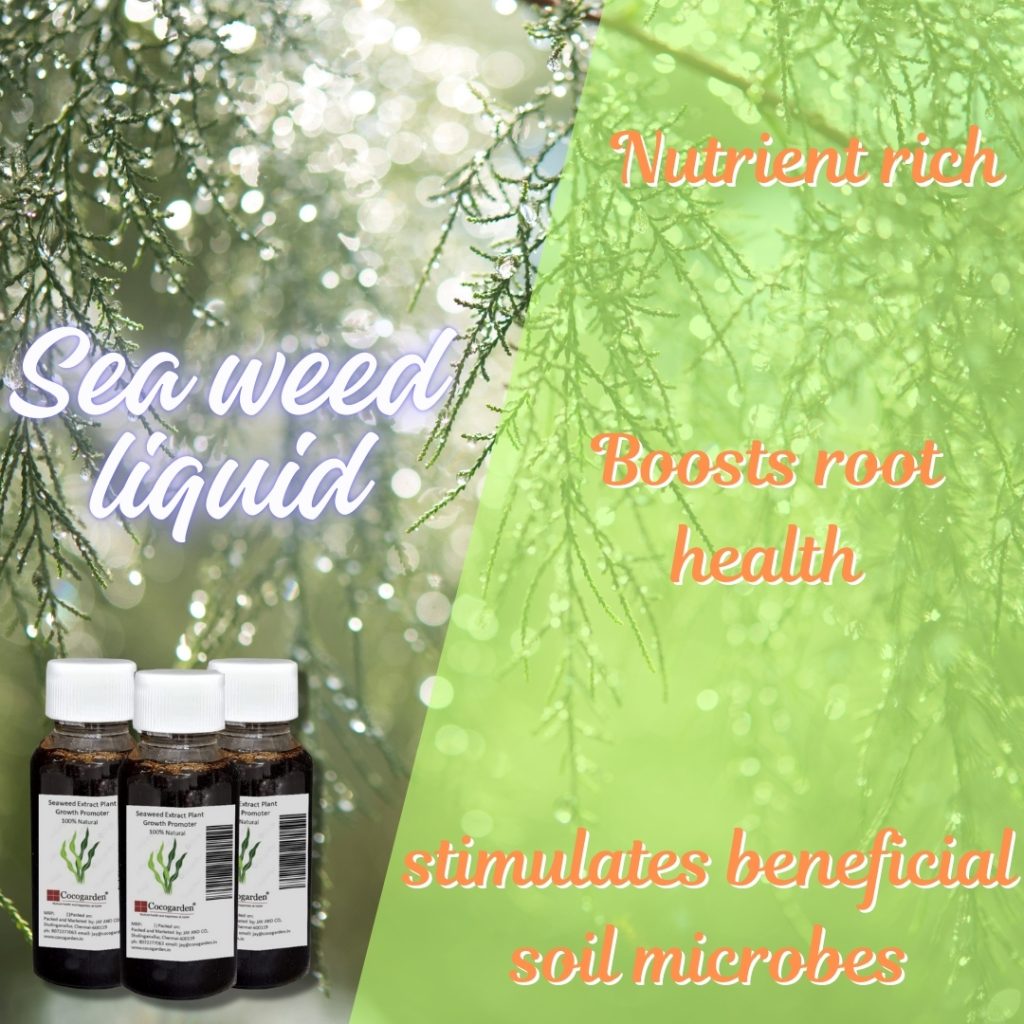
Seaweed liquid fertilizer is becoming a favorite among gardeners for its ability to naturally enhance plant health and stimulate growth. Packed with essential nutrients, trace elements, and growth hormones, seaweed liquid provides plants with the support they need to thrive in both soil and container gardens. This guide explores how seaweed liquid can benefit your plants, the science behind its effectiveness, and the best ways to incorporate it into your gardening routine for optimal results.
1. Nutrient-Rich Formula for Enhanced Growth
Seaweed liquid contains a wide range of vital nutrients and minerals, such as potassium, magnesium, nitrogen, and various trace elements, that plants need to grow strong and healthy. These nutrients help strengthen cell walls, improve root development, and support overall plant health, leading to increased growth and productivity. Unlike synthetic fertilizers, seaweed is a slow-release option, providing plants with a steady supply of nutrients over time without the risk of burning roots or leaves.
2. Boosts Root Health and Soil Microbiology
One of the greatest benefits of seaweed liquid is its positive impact on root health. Seaweed promotes root elongation and branching, which improves nutrient absorption and anchors plants more securely in the soil. Additionally, seaweed stimulates beneficial soil microbes, creating a more active soil ecosystem. These microbes break down organic matter, making nutrients more available to plants and creating an environment where plants can thrive. Healthier roots and richer soil microbiology lead to more resilient plants, even under challenging conditions.
3. Naturally Increases Plant Resistance to Stress
Seaweed liquid acts as a natural biostimulant, helping plants resist stress factors such as drought, temperature fluctuations, and pest pressures. Compounds found in seaweed, including natural growth hormones like cytokinins and auxins, encourage plants to better regulate their water usage and cellular function. As a result, plants treated with seaweed liquid are often more robust and adaptable to environmental changes, making seaweed an invaluable addition to gardens in diverse climates.
4. Improves Flowering and Fruiting
For flowering plants, fruits, and vegetables, seaweed liquid can be a game-changer. The potassium and trace minerals in seaweed support flower and fruit development, leading to larger, more vibrant blooms and improved crop yields. Seaweed encourages strong flowering and fruiting cycles, meaning your roses will be more colorful, and your tomatoes or cucumbers will be more abundant. Regularly applying seaweed liquid throughout the growing season can ensure a consistent supply of nutrients, which is key to maximizing flowering and fruit production.
5. How to Apply Seaweed Liquid for Best Results
Incorporating seaweed liquid into your gardening routine is simple. Dilute the seaweed concentrate according to package instructions, and apply it as a foliar spray or soil drench. Foliar sprays are highly effective since plants can absorb the nutrients directly through their leaves, providing an immediate nutrient boost. For soil applications, water the base of each plant with the diluted solution to nourish roots directly. Using seaweed liquid every 2-3 weeks during the growing season is generally ideal for maintaining steady growth and health.