
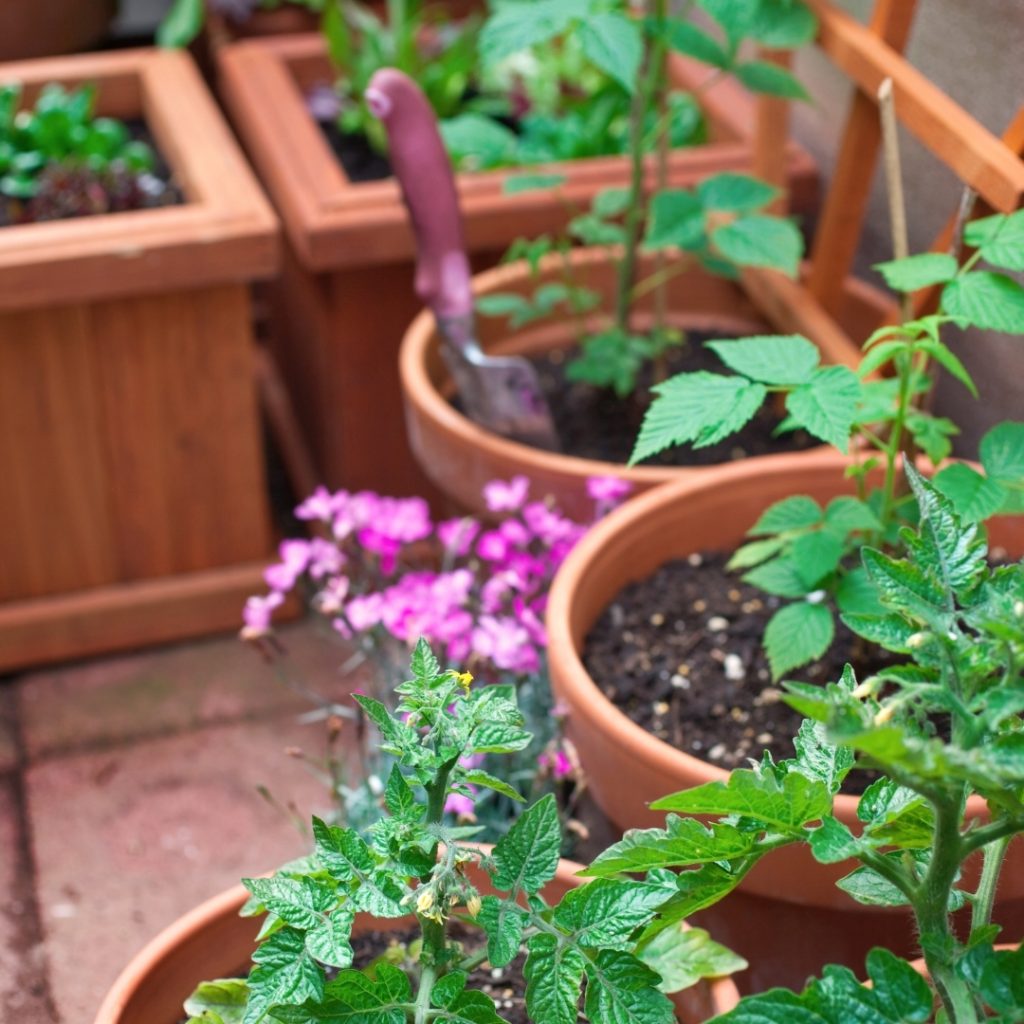
Container gardening is an excellent solution for growing plants in small spaces like balconies, patios, or urban apartments. It allows flexibility in choosing the size and type of containers, from pots and hanging baskets to repurposed items, making it versatile and space-efficient. With proper soil, drainage, and sunlight, a variety of plants—herbs, flowers, vegetables, or even small fruit trees—can thrive. Container gardening also makes it easy to move plants as needed, control soil quality, and reduce pest issues, offering a practical and rewarding way to enjoy gardening in limited areas.
Versatility: You can place containers anywhere — on balconies, windowsills, or even indoors. This allows you to create a garden no matter how limited your space is.
Portability: Containers are easy to move, so you can adjust your garden’s layout, reposition plants for better sunlight, or bring them indoors during the colder months. Customization: You can choose the right size, shape, and style of containers to fit your aesthetic and the needs of your plants. Whether it’s a few hanging baskets, colorful pots, or vertical planters, the options are endless.
Space Efficiency: Containers take up minimal space, allowing you to grow a variety of plants in a compact area. You can grow herbs, flowers, vegetables, or even small trees in containers.
Choosing the Right Containers for Your Small Space Garden
1. Size and Depth
Small Plants: If you’re growing herbs, flowers, or small plants, choose containers that are at least 6-12 inches deep. Shallow containers are perfect for smaller root systems.
Larger Plants: For larger vegetables or flowering plants, such as tomatoes or cucumbers, you’ll need larger pots with a minimum of 18 inches in depth to allow room for roots to grow.
2. Material
Plastic Containers: Lightweight, affordable, and available in various shapes and sizes, plastic pots retain moisture well and are perfect for small spaces.
3. Drainage
Containers have drainage holes to prevent water from pooling at the bottom. Proper drainage is essential to avoid waterlogging, which can lead to root rot and other plant diseases. If your containers don’t have drainage holes, you can drill some yourself.