
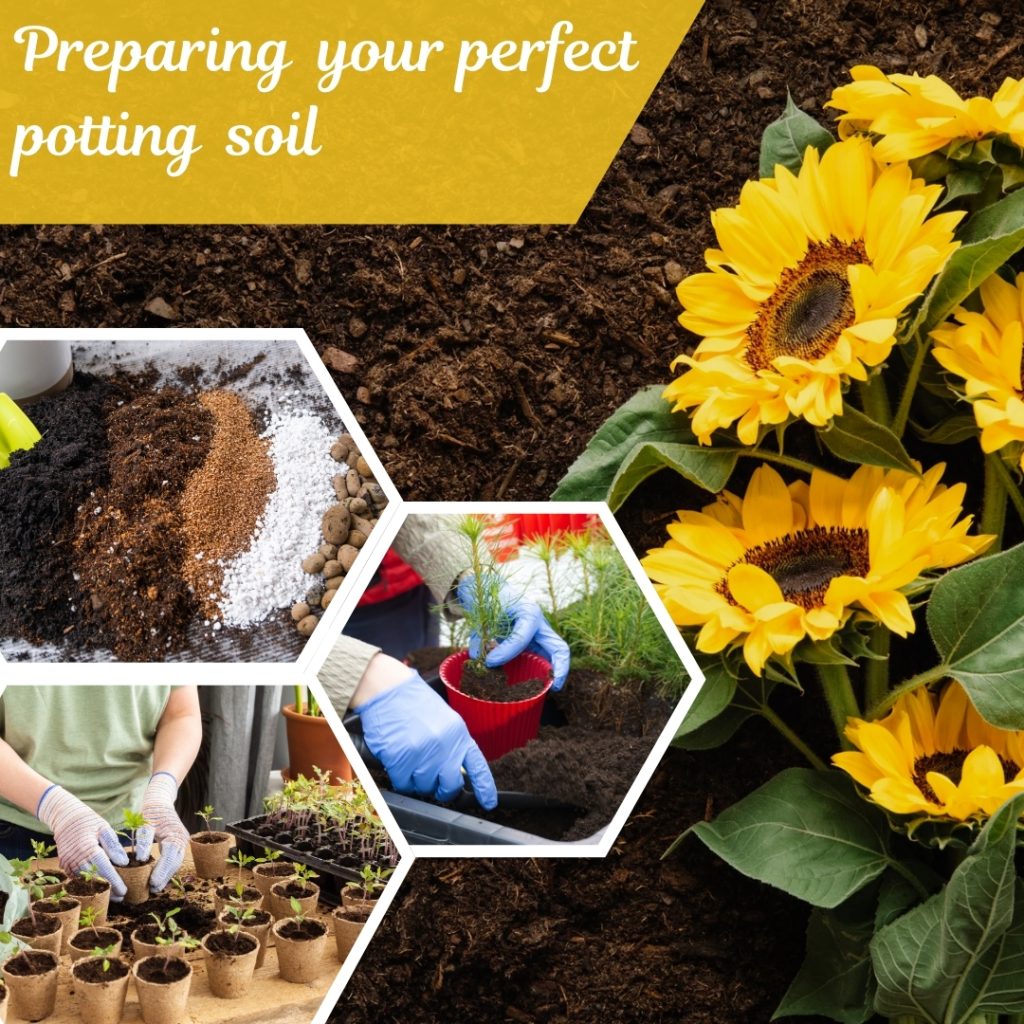
Creating your own potting mix is an excellent way to ensure your plants get the nutrients, structure, and drainage they need to thrive. Store-bought potting soil can be expensive and may not always suit specific plants, but a DIY mix allows you to tailor it to your garden’s unique needs. In this blog post, we’ll walk you through the steps to make your own potting mix for optimal growth, whether you’re nurturing vegetables, flowers, or houseplants.
1. Understand the Basics of a Great Potting Mix
A high-quality potting mix has three key components:
Organic Matter: Provides nutrients and retains moisture. Examples include compost, cocopeat.
Aeration Materials: Keeps the mix light and prevents compaction. Examples include coconut coir, Perlite.
Drainage Enhancers: Helps excess water escape to prevent root rot.
The right combination of these ingredients creates a well-balanced environment that supports healthy root growth and plant development.
2. Customize the Mix for Your Plants
Different plants have unique soil requirements, so it’s essential to tailor your mix. Here are some common examples:
Vegetables and Herbs: Require nutrient-rich soil. Add plenty of compost and a handful of natural fertilizers like bone meal.
Succulents and Cacti: Thrive in well-draining soil. Perlite with a small amount of organic matter.
Flowers and General Houseplants: Benefit from a mix with balanced nutrients and moderate water retention. Use cocopeat or coconut coir, compost, and perlite in equal parts.
Customizing your potting mix ensures each plant type gets the specific environment it needs to flourish.
3. Ingredients You’ll Need
Here’s a general recipe to make your own potting mix:
1 part organic matter (compost, cocopeat)
1 part drainage enhancer (coir chips)
Optional additives for improved growth:
Natural fertilizers: Bone meal, Cow and Goat manure.
4. Store and Use Your Potting Mix
Once your mix is ready, store it in an airtight container to keep it fresh and dry. Use it for repotting houseplants, starting seeds, or filling garden containers. Remember to monitor your plants for any signs of nutrient deficiencies or overwatering, as even a well-made mix may need adjustments over time.